
2026-09-16 ·
Tracking Rodent Droppings to Find Entry Points
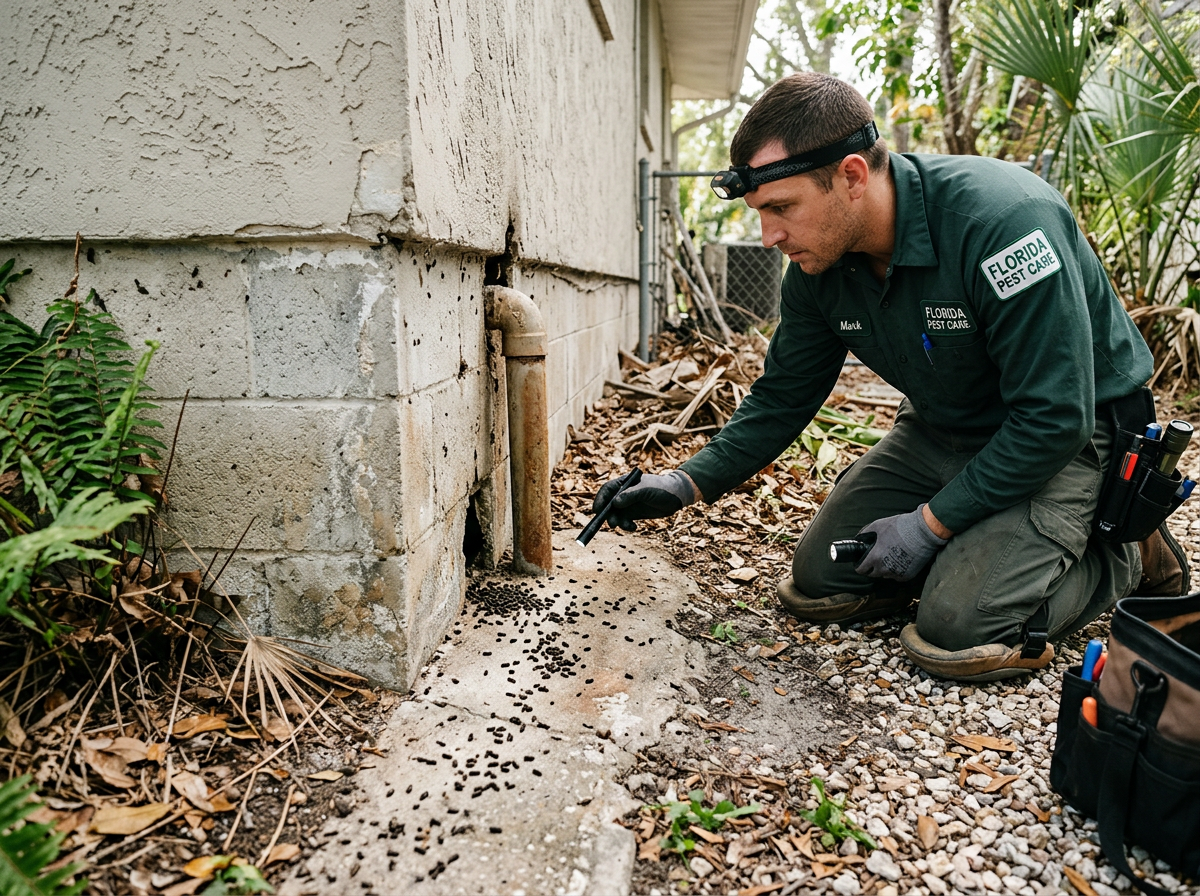
Rodent droppings appear within 2 feet of active entry points, and roof rats pass through gaps measuring 1/2 inch. In Bartow, these signs show up near soffits, vent boots and barrel-tile voids where rats travel from oak canopies and palm fronds. Tracking the location, freshness and quantity of droppings narrows down the exact access routes without guesswork.
Reading Dropping Clusters Near Rooflines
Fresh droppings stay dark and soft for the first day or two, turning gray and crumbly after three days. Roof rats produce 40 to 50 droppings nightly, so dense clusters form directly below entry holes in attics or along wall voids. In central Florida homes, these piles often sit under soffit gaps or where palm fronds touch the roof edge. Checking the attic during daylight hours with a flashlight shows whether the droppings align with insulation disturbance or wiring chew marks. Once the cluster is mapped, the nearest exterior opening becomes the primary target for sealing.
Connecting Trails to Specific Access Points
Dropping trails run in straight lines from food sources back to the entry hole. In Bartow neighborhoods, roof rats follow the same path nightly along rafters or wall tops, leaving a line of pellets that points straight to the 1/2-inch gap they use. Check where the trail ends at the roofline; common spots include loose vent boots, missing ridge-cap screws and spaces between barrel tiles. Trim oak branches and palm fronds back 6 feet from the eaves to break these routes. After trimming, recheck the attic for new droppings to confirm the old entry is no longer active.
Sealing Identified Gaps with Proper Materials
Once droppings pinpoint the openings, cover them with 1/4-inch hardware cloth or metal flashing rather than expanding foam alone. Roof rats chew through foam within weeks, so the mesh must be secured with screws and caulk at the edges. Focus first on soffit corners, pipe penetrations and tile voids where trails converge. This step prevents new rats from following the same route even when litters arrive four to six times per year. Homeowners can inspect the work themselves by looking for daylight around the repairs from inside the attic.
Addressing Contamination After Entry Points Are Found
When droppings indicate long-term activity, insulation near the entry often holds urine and nesting debris that must be removed. Attic cleanup removes the contaminated material so new rodents do not use the scent to relocate the opening. In Florida heat, a rodent that dies inside a wall produces noticeable odor within four days, making prompt sanitation important. After sealing, monitor the attic for two weeks to verify no fresh droppings appear before restoring insulation.
Following droppings to their source leads directly to the practical fixes outlined in rodent exclusion and sealing. Readers who want to recognize trail patterns in their own neighborhood can review identifying roof rat trails in Bartow neighborhoods for additional local examples.