
2026-09-16 ·
Sealing Entry Points on Older Bartow Homes
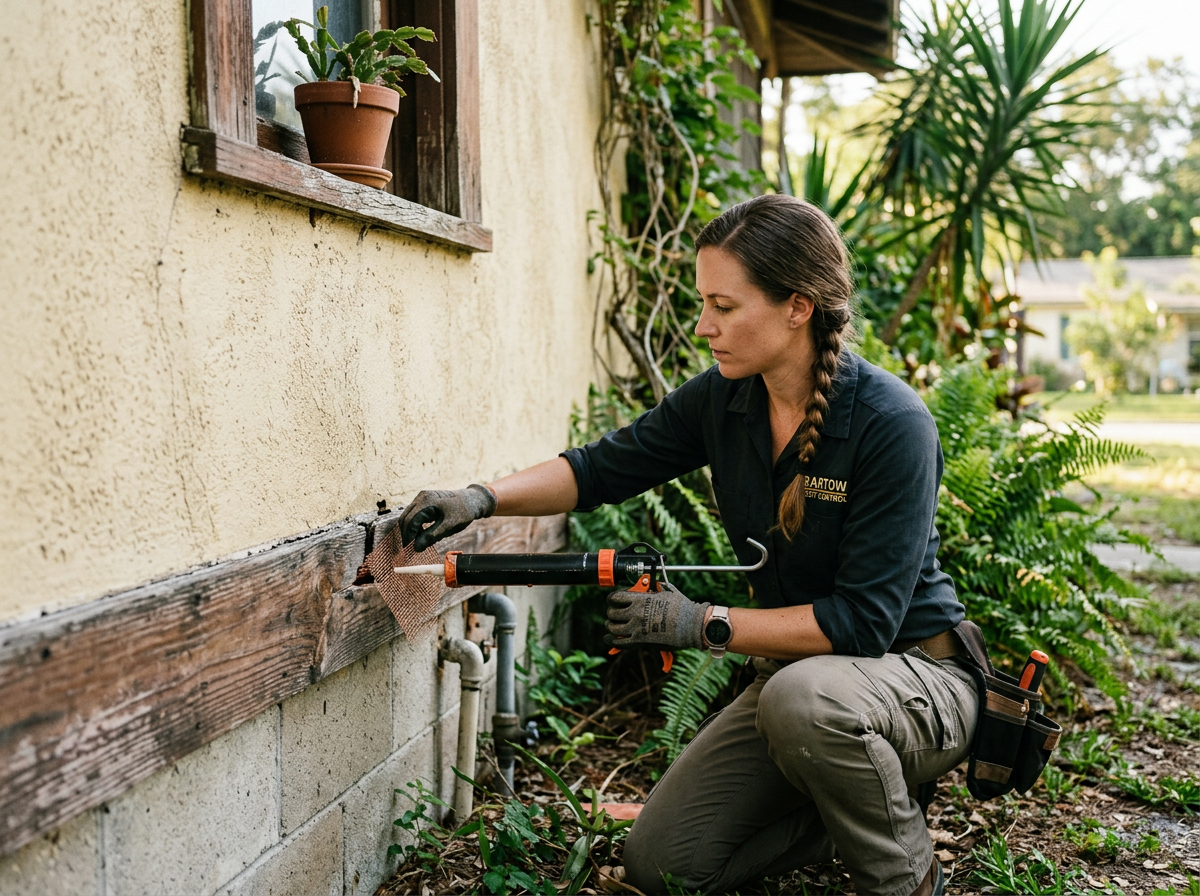
Older Bartow homes allow roof rat entry through gaps as small as 1/2 inch around soffits, barrel-tile voids, and vent boots. Sealing these openings with 1/4-inch hardware cloth and metal flashing prevents new rodents from moving in when baiting alone fails due to year-round breeding.
Common Entry Points in Older Bartow Structures
Older homes in Bartow often feature wood soffits and stucco that develop cracks over decades. Roof rats climb oak canopies and palm fronds to reach these spots, then slip through 1/2-inch openings into attics. Barrel-tile roofs create additional voids where tiles meet the fascia, and vent boots around plumbing stacks loosen with age. These access routes stay open because Florida lacks a winter die-off period, so populations remain active. Checking the roofline from the ground reveals sagging palm fronds touching the eaves and oak branches within a few feet of the structure. Inside the attic, droppings near insulation edges point to where rats first entered.
Effective Sealing Techniques
Start by replacing damaged soffit panels with solid metal versions secured by screws. Fill remaining gaps with 1/4-inch hardware cloth folded into the opening and fastened with screws and washers so it cannot be chewed. For barrel-tile voids, insert metal strips or foam backer rod covered by flashing that matches the tile profile. Seal vent boots with self-adhesive flashing tape rated for exterior use, overlapping the pipe and surrounding tiles by at least 3 inches. Work from a ladder positioned on stable ground and avoid sealing any active entry until rodents have been removed. These steps keep new rats out while the attic remains accessible for later cleanup.
Vegetation Management Around the Roofline
Trim oak branches and palm fronds back at least 6 feet from the roof edge to remove climbing routes. Cut lower palm fronds that hang near the fascia and thin dense oak canopy sections that overhang the home. This clearance stops rats from dropping directly onto soffits or using fronds as bridges. Perform trimming during dry periods so cut material does not pile against the foundation. Re-check the roofline twice a year because rapid Florida growth quickly closes the gap. Maintaining this distance reduces the chance of new entry points forming even on homes with otherwise sound siding.
Handling Contamination After Entry
Once entry points are sealed, inspect insulation for droppings and urine stains that remain after rodents leave. Remove and replace affected sections rather than attempting to clean in place, then install new baffles or ridge vents that still allow airflow. Odour from a rodent that dies in a wall cavity can develop within 3 to 5 days in Bartow heat and may linger until the carcass is located and removed. Professional attic cleanup crews use HEPA vacuums and disinfectants to restore the space without spreading particles. Homeowners can continue monitoring with snap traps placed along walls if activity restarts.
Professional Exclusion Services in Bartow
Rodent exclusion and sealing addresses the full roofline on older Bartow homes where DIY access is limited. Technicians also handle roof rat control by combining exclusion with targeted trapping. For homes that already show signs of attic activity during summer, the article How Summer Heat Drives Rodents Indoors in Bartow explains additional seasonal steps. FL Rodent Pros operates from 870 E Gay St, Bartow, FL 33830 and focuses on permanent sealing over repeated bait applications.