
2026-09-16 ·
How Summer Heat Drives Rodents Indoors in Bartow
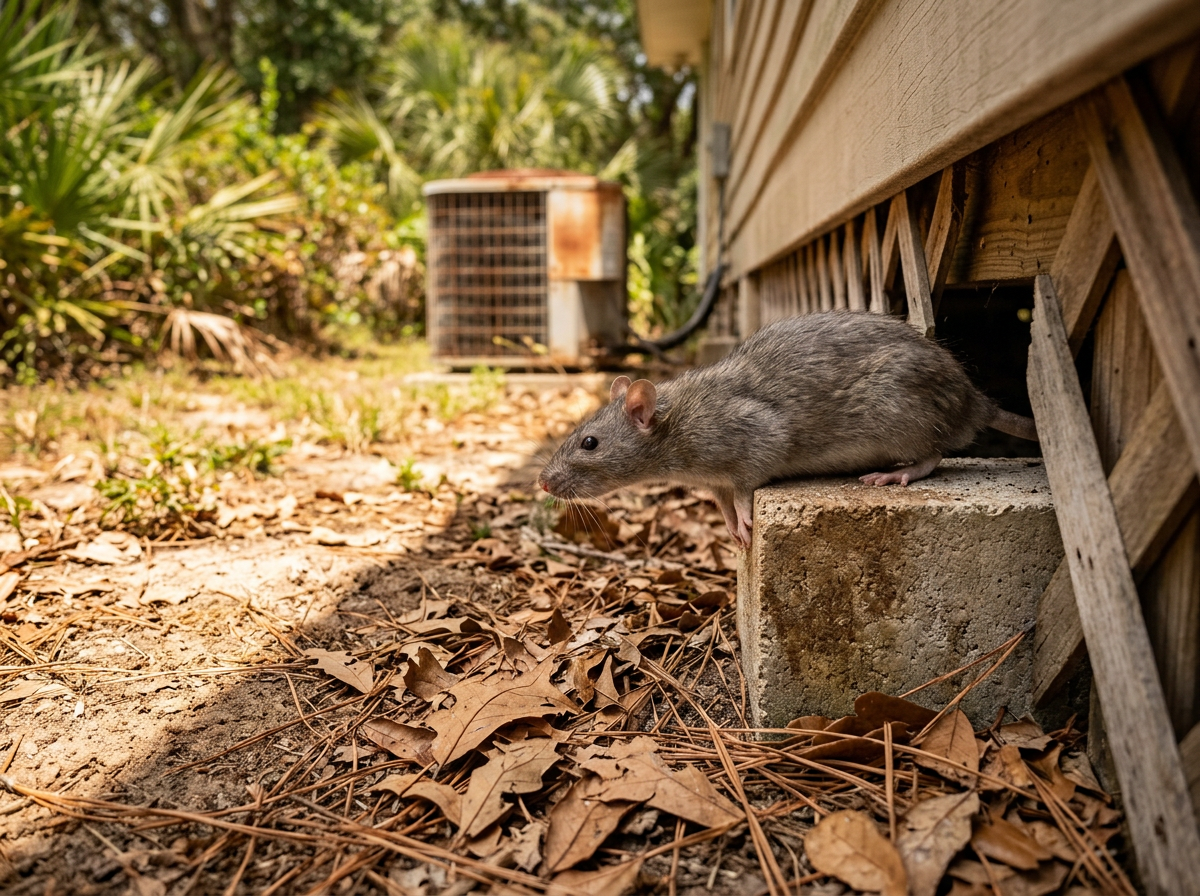
Summer heat in Bartow forces roof rats to move indoors once daytime highs climb and attic spaces reach temperatures that make outdoor nesting unsustainable. Roof rats travel along oak branches and palm fronds that touch or overhang roofs, then slip through soffit gaps, barrel-tile voids, and vent-boot openings as small as 1/2 inch. Because Florida has no winter die-off, populations stay active year-round and simply shift locations when outdoor cover becomes too hot.
How Heat Changes Rodent Movement Patterns
Once temperatures rise, roof rats leave dense vegetation and seek the shade and consistent moisture found in wall voids and attics. In Bartow, properties near mature oaks see increased activity because the canopy provides both travel routes and daytime cover until the heat becomes extreme. Rats then test every roofline opening, using the same paths repeatedly until they establish indoor nests. This shift happens faster on homes where trees and palms have not been cut back, because the animals only need to cross a short gap to reach cooler shelter. The result is more frequent sightings of droppings in attics and insulation disturbance that appears within days of the first hot spell.
Entry Points Common on Bartow Homes
Roof rats exploit the same set of access points on most local houses. Soffits with loose or missing screens allow direct entry into the attic. Barrel-tile roofs develop gaps under the edges where rats can squeeze through, and vent boots around plumbing stacks often pull away from the roof deck over time. Palm fronds that hang within a few feet of the eaves give the animals an elevated bridge they use at night. Checking these spots after a stretch of hot weather reveals fresh gnaw marks or rub marks along the most traveled routes. Addressing each opening with durable materials prevents the repeated entries that baiting alone rarely stops.
Why Exclusion Outperforms Baiting in Florida
Bait stations reduce some outdoor activity but leave entry points open, so new rats quickly replace those removed. Exclusion focuses on sealing the 1/2 inch gaps and larger holes that roof rats actually use, combined with trimming vegetation to remove the overhead highways. In Bartow this approach works because the rodents cannot reach the attic once the physical routes are blocked. After sealing, any remaining animals inside can be removed without creating new access for others. Homeowners who combine exclusion work with regular trimming see fewer repeat visits compared with bait-only programs that ignore the roofline connections.
Attic Conditions After Entry
Once rodents reach the attic they contaminate insulation with droppings and urine while building nests in the hottest, most protected corners. When one dies inside a wall or ceiling, the odour becomes noticeable within a few days and can linger until the carcass is located and removed. Contaminated insulation loses its effectiveness and requires full removal and replacement during cleanup. Properties that skip sanitation after an infestation often face recurring issues because the scent left behind continues to attract new rodents. Thorough removal of nesting material and droppings followed by sealing prevents the cycle from restarting each summer.
Practical Steps That Reduce Summer Pressure
Trim oak branches and palm fronds so at least 6 feet of clearance exists between vegetation and the roofline. Install 1/4 inch hardware cloth over soffit vents and around vent boots to block the smallest openings rats can exploit. Walk the roof perimeter after storms to check for lifted tiles or loose flashing that create new gaps. These steps directly interrupt the heat-driven movement that brings roof rats indoors in Bartow. For homes already showing signs, combining these changes with targeted removal keeps the attic clear through the hottest months.