
2026-09-16 ·
Signs of Mice in Attics During Florida's Rainy Season
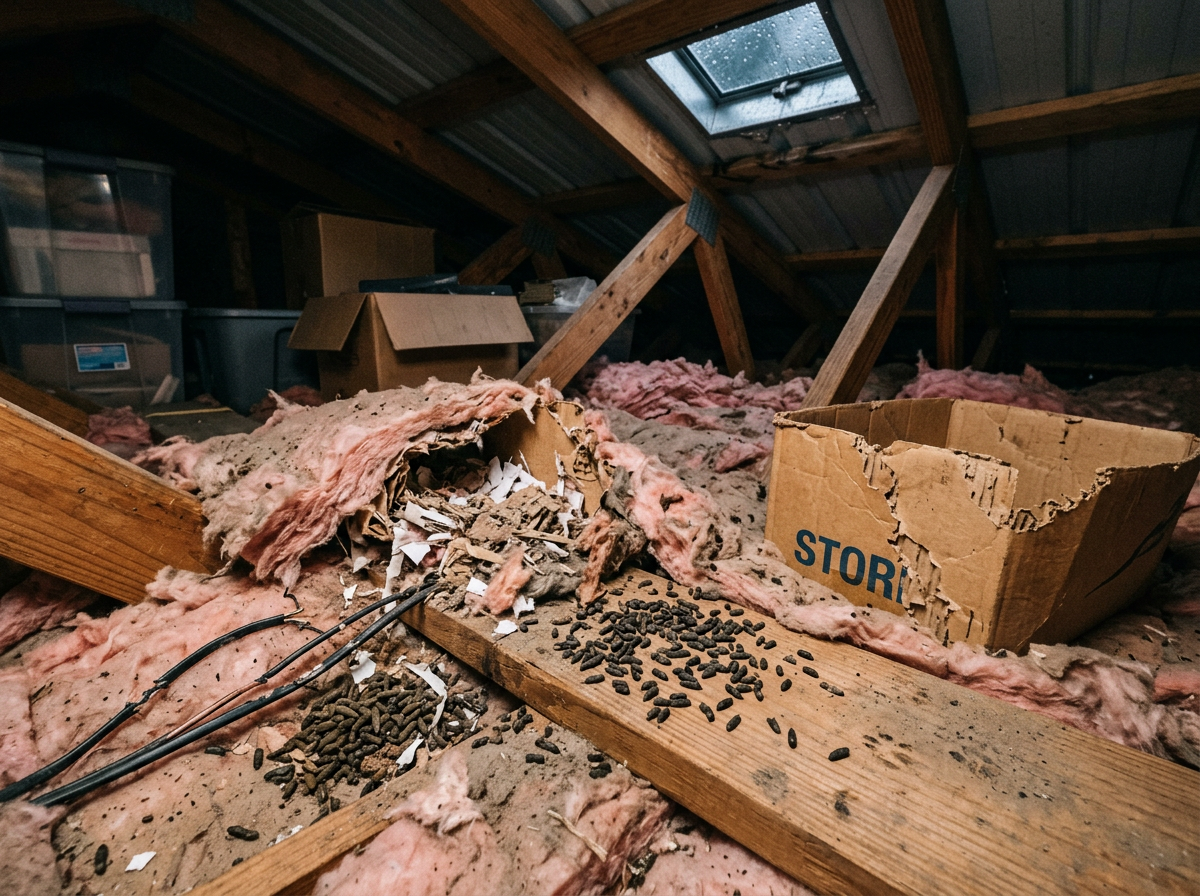
During Florida's rainy season, mice often enter attics within days of heavy rains as they move from saturated ground cover into dry overhead spaces, with fresh droppings appearing in the first 48 hours after entry.
Noises and Nighttime Activity
Mice produce light scratching and scurrying sounds in attics, especially between dusk and dawn when rain keeps them inside. These noises start near soffits or where palm fronds touch the roofline and travel through insulation. Homeowners in Bartow notice the sounds intensify after storms because mice seek warmth and dryness above living areas. The activity often stays in one section of the attic until entry points are addressed through targeted sealing.
Droppings and Urine Evidence
Fresh droppings measure about 1/8 inch long with pointed ends and appear in clusters near insulation edges or stored items. Mice leave 40 to 50 droppings per night, so new piles show up quickly during wet periods. Urine stains show as dark streaks on wood or drywall when a flashlight shines across the surface at an angle. These signs concentrate along walls where mice travel from soffit gaps into the main attic space.
Odor and Dead Rodent Issues
A mouse that dies inside a wall or insulation produces an odour within three to five days that grows stronger in Florida heat. The smell stays localized at first then spreads through vents when humidity rises after rain. Attic cleanup and sanitation becomes necessary once odour appears because contaminated insulation holds moisture and attracts more rodents. Checking for the source requires lifting insulation sections near suspected entry routes.
Insulation and Structural Damage
Mice shred insulation to build nests, creating visible tunnels and loose material that reduces R-value over time. They also chew wiring and stored boxes, leaving small tooth marks. During rainy season the increased moisture from open gaps speeds up this damage because mice stay longer once inside. Checking insulation depth and looking for shredded areas near the roof deck reveals activity before it spreads across the entire attic.
Entry Points Common in Rainy Season
Mice pass through gaps as small as 1/4 inch around vent boots, soffits, and barrel-tile edges. Rain drives them higher into oak canopies and palm fronds that already touch the roof, giving them direct access. Trimming trees and palms back at least 6 feet from the roofline removes these bridges. Installing 1/4-inch hardware cloth over larger openings stops new entries while allowing airflow.
Next Steps After Finding Signs
Once signs appear, focus on locating and sealing all entry points before addressing interior cleanup. Mouse control targets the specific pathways mice use in Florida attics. Attic cleanup and sanitation removes contaminated insulation and nesting material that holds moisture. Homeowners in older Bartow homes often start with sealing entry points on older Bartow homes to match construction details. Follow up with rodent exclusion and sealing to keep mice out through the rest of the wet season.