
2026-09-16 ·
Identifying Roof Rat Trails in Bartow Neighborhoods
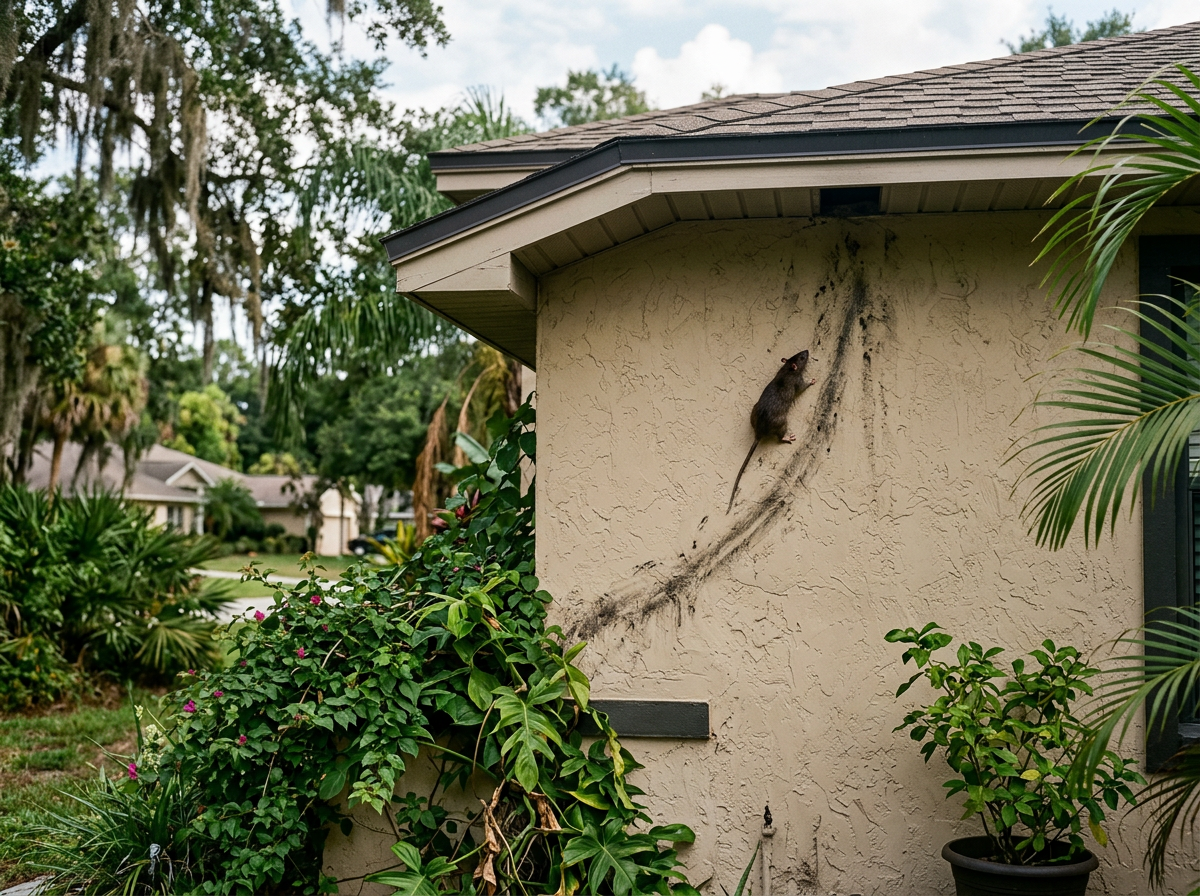
Roof rat trails in Bartow neighborhoods appear as dark grease marks along rooflines where rats travel nightly from nearby oaks and palms into soffits or vent boots. These paths form when the rodents repeatedly rub their fur against the same surfaces while moving between trees and attic spaces. Homeowners often notice the marks first on fascia boards or where palm fronds touch the edge of the roof.
Common Trail Markers Around Bartow Homes
Roof rats create visible paths using the same routes each night across Bartow properties. Look for dark smudges along soffits and the top of exterior walls where their bodies brush against painted surfaces. Small droppings about the size of a grain of rice often cluster near these marks, especially under eaves or in corners of the attic. Gnaw marks on wood trim or plastic vent covers also signal active travel lines. In neighborhoods with mature oak canopies, the trails frequently start where branches hang within a few feet of the roof edge. Checking these spots after dark with a flashlight can confirm movement without disturbing the rodents.
Following Trails to Entry Points
Once grease marks or droppings appear, trace them upward to find where rats enter the structure. In Bartow homes with barrel tile roofs, gaps around vent boots and loose tiles provide easy access points that align with the trails. Palm fronds brushing the roofline often mark the final stretch of the path before entry. Soffit corners and damaged screens on gable vents show similar wear when rats follow the same route repeatedly. Walking the perimeter during daylight helps map how the trails connect tree cover to the house without needing to enter the attic immediately.
Attic Evidence Along the Trails
Inside the attic, roof rat trails continue across insulation and joists as narrow paths cleared of debris. Droppings accumulate along these routes, and urine stains may appear on wood where the rodents pause. Contaminated insulation near the entry points often shows matted areas from frequent travel. When a rat dies in a wall void along one of these paths, the odour becomes noticeable within a few days as temperatures rise. Attic cleanup and sanitation addresses the mess left behind once trails are confirmed.
Prevention by Cutting Trail Access
Trimming oak branches and palm fronds back from the roofline breaks the overhead paths roof rats rely on in Bartow. Maintaining at least 6 feet of clearance between vegetation and the house stops the rodents from using the canopy as a bridge. Sealing soffit gaps and installing hardware cloth over vent openings further disrupts the established trails. Roof rat control focuses on these exclusion steps rather than relying on bait alone, since Florida rodents do not experience a winter die-off that would reduce numbers naturally.
Connecting Local Conditions to Trail Patterns
Bartow summers drive more roof rat activity as heat pushes rodents toward shaded attic spaces along the same trails. The related article on summer heat explains how these patterns intensify during peak temperatures. Checking trails near the address at 870 E Gay St, Bartow, FL 33830 reveals how local tree cover influences entry points on similar homes throughout the area. Consistent monitoring of grease marks and droppings helps catch new trails before they become established routes into the structure.