
2026-09-16 ·
Landscaping Changes That Reduce Rodent Habitat
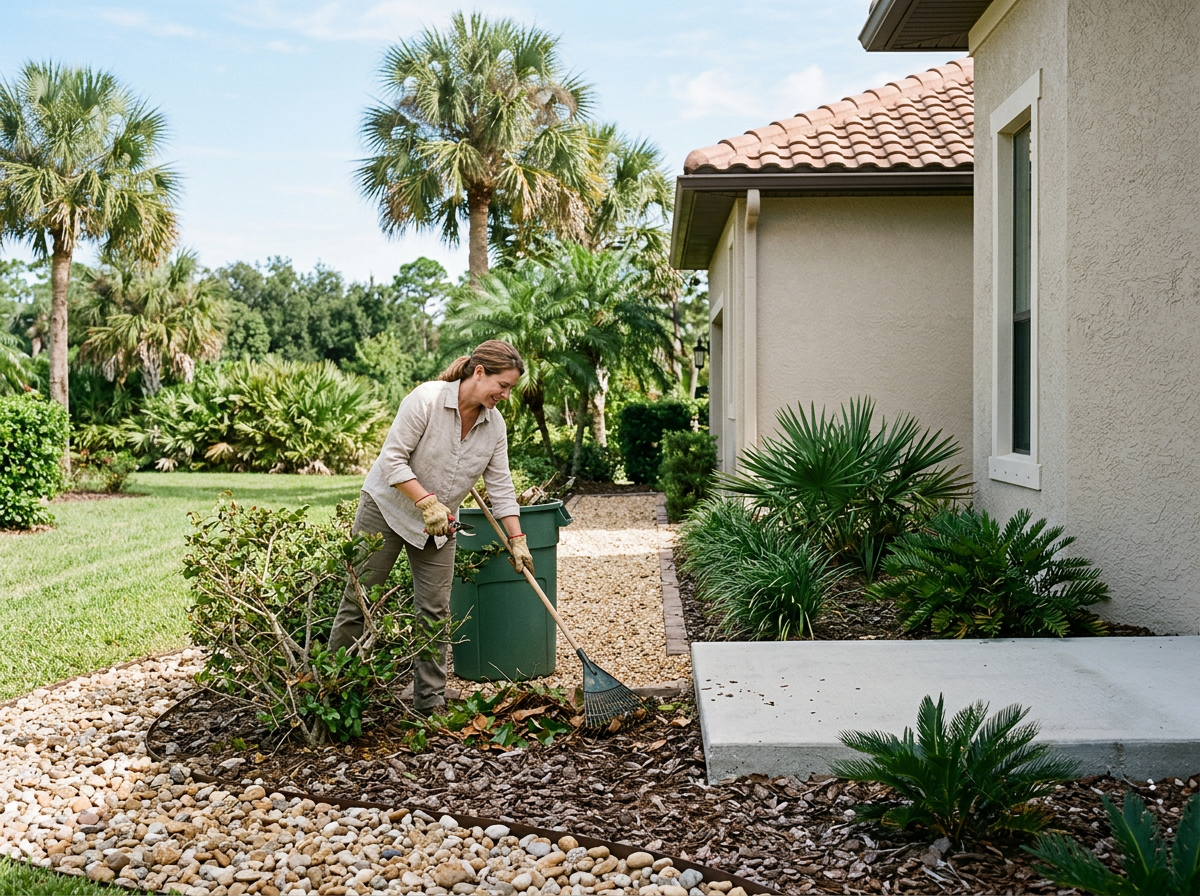
Clearing a 6-foot gap between tree canopies, palm fronds, and the roofline blocks the main travel paths roof rats use to reach soffits, vent boots, and barrel-tile voids. Roof rats travel along continuous branches and fronds directly onto the house, then enter through openings as small as ½ inch. Removing that connection forces them to stay on the ground where exclusion work becomes more effective.
Remove Overhead Branches and Fronds
Oak limbs and palm fronds that touch or hang within 6 feet of the roof give roof rats a direct highway. Cut back every branch and frond so at least 6 feet of open space exists between vegetation and the roof edge. This single step stops most new entries because roof rats rarely cross open air. After trimming, check the cut ends each season because new growth quickly closes the gap again. Homeowners in Bartow see fewer roof rat signs inside once the canopy is held back this distance year-round.
Clear Dense Ground Cover Near Foundations
Low shrubs, thick ground cover, and stacked wood piles next to the house create daytime shelter and nesting spots. Pull vegetation back at least 18 inches from the foundation so the soil strip stays open and visible. Replace heavy mulch with gravel or bare soil in that strip to remove cover. Move firewood stacks and leaf piles 20 feet or more from the house wall. These changes reduce the number of rats that can live close enough to test the siding for entry points.
Install Barriers at Tree and Palm Bases
Metal collars or ¼-inch hardware cloth wrapped around tree trunks 4 feet above ground stop rats from climbing into the canopy. Secure the mesh tightly so no gap larger than ½ inch remains at the seam. On palms, trim the skirt of dead fronds completely and keep new fronds from touching the roof. These barriers work because roof rats prefer to climb rather than jump long distances. Re-check the collars twice a year for rust or loosening.
Maintain Roofline Clearance Year-Round
Florida roofs stay accessible all year because roof rats do not experience a winter die-off. Schedule trimming before the spring breeding surge so new growth does not close the 6-foot gap. After any storm, inspect for broken limbs that may have fallen against the soffit. Consistent clearance pairs well with sealing work at /services/rodent-exclusion-and-sealing because rats that cannot reach the roof cannot exploit small openings. The same practice also limits activity during the cooler months described in /blog/winter-rodent-activity-in-central-florida-homes.
Combine Trimming With Exclusion at Entry Points
Landscaping changes alone do not close existing holes. Once the canopy is trimmed, walk the roofline and soffits to find any remaining ½-inch gaps around vent boots, tile edges, and pipe penetrations. Use ¼-inch hardware cloth or metal flashing to cover those spots permanently. This sequence—trim first, then seal—prevents rats from simply moving to another access point on the same property. Follow the same order on outbuildings and sheds to stop rats from shifting between structures.
Regular trimming and ground clearance keep roof rat pressure low without relying on bait stations that may not reach attic populations. Homeowners at 870 E Gay St, Bartow, FL 33830 who maintain the 6-foot roofline gap report fewer new droppings and less insulation damage over time. Pair these steps with targeted sealing at /services/roof-rat-control for lasting results.